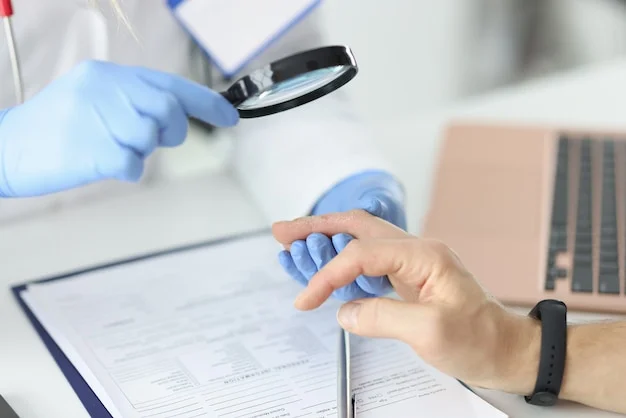
Performed by Dr. Priyanka Sangani at Blue Ray Neuro Care
A skin or muscle biopsy is a diagnostic procedure in which a small sample of skin or muscle tissue is removed and examined under a microscope. It helps identify conditions affecting nerves, muscles, blood vessels or connective tissue when other tests have not provided a clear diagnosis. Dr Priyanka Sangani performs this procedure at Blue Ray Neuro Care in Narsingi.
We believe in honest, upfront disclosure so you can make an informed decision.
A step-by-step look at what happens during this procedure.
The doctor identifies the best location for the biopsy based on your symptoms and examination findings.
The skin over the area is cleaned with antiseptic solution, and local anaesthetic is injected to numb the site.
A small incision is made, and a sample of skin or muscle tissue is carefully removed. The size depends on how much tissue is needed for testing.
The incision is closed with stitches or surgical strips, and a sterile dressing is applied.
The tissue sample is sent to a laboratory where it is examined under a microscope and may undergo special staining or other tests to identify abnormalities.
A structured, patient-first approach from first consultation to full recovery.
Dr Sangani reviews your medical history, symptoms and prior test results to explain why the biopsy is recommended and what to expect.
The biopsy is performed using sterile technique and precise tissue handling to ensure the sample is suitable for accurate diagnosis.
You receive clear instructions on keeping the site clean, when to change dressings and signs of complications to watch for.
Once laboratory analysis is complete, Dr Sangani explains the findings and discusses treatment options based on the diagnosis.
What to expect at each stage of your recovery journey.
Keep the dressing clean and dry. Mild pain and aching are common and usually respond to simple pain relief. Avoid strenuous activity that could stress the wound.
The wound begins to close. You can usually resume light daily activities but should continue to avoid heavy lifting or vigorous exercise. Follow instructions for dressing changes.
Most discomfort resolves and the incision closes completely. Stitches are removed if required. A small scar may remain, which typically fades over time.
The biopsy can identify specific muscle, nerve or connective tissue diseases that were not clear from other tests, guiding targeted treatment.
Results help determine whether medication, immunotherapy, physical therapy or other interventions are appropriate for your condition.
The biopsy itself does not treat the underlying disease. It provides information, but further therapy is usually needed to manage the condition.
In some cases the biopsy may not show a clear diagnosis, and additional tests or a repeat biopsy may be necessary.
The right choice depends on your diagnosis, risks and circumstances — discussed with you at your consultation.
These tests measure electrical activity in nerves and muscles and may provide enough information to make a diagnosis without needing a biopsy. They are considered when functional testing can clarify the problem.
Blood work can detect markers of inflammation, infection or metabolic disease, and MRI or ultrasound may show structural changes. These are usually tried first before a biopsy is planned.
If symptoms are mild and stable, the doctor may recommend watching for changes over time rather than proceeding directly to biopsy. This approach depends on the level of diagnostic uncertainty and symptom impact.
Let's clear up some of the most common myths about skin or muscle biopsy.
Get a personalised assessment from an experienced specialist. Understand your options, ask your questions, and decide with confidence.