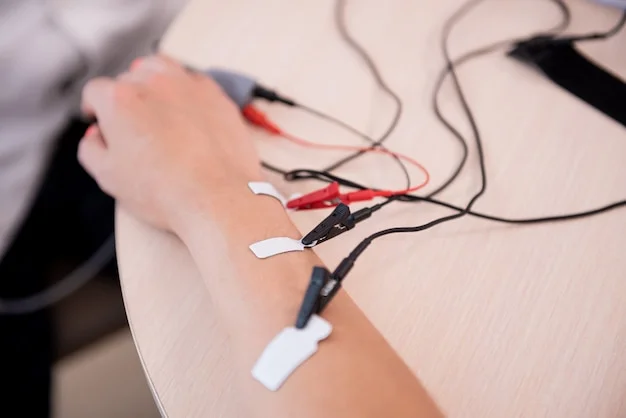
Performed by Dr. Priyanka Sangani at Blue Ray Neuro Care
Electromyography (EMG) is a diagnostic test that measures the electrical activity of muscles and the nerves controlling them. Dr. Priyanka Sangani uses this test to identify conditions affecting muscle function and nerve health. The procedure involves inserting fine needle electrodes into muscles to record their electrical signals at rest and during contraction.
We believe in honest, upfront disclosure so you can make an informed decision.
A step-by-step look at what happens during this procedure.
Small adhesive patches are placed on the skin over nerves to measure nerve conduction velocity if nerve conduction studies are performed alongside EMG.
A fine, sterile needle electrode is gently inserted through the skin into the muscle being tested. This records electrical activity from individual muscle fibres.
Electrical activity is recorded while the muscle is completely relaxed to detect any abnormal spontaneous signals.
You will be asked to gently contract the muscle while the electrode records the pattern and strength of electrical signals during activity.
The neurologist reviews the electrical patterns to identify signs of nerve damage, muscle disease or problems with nerve-muscle communication.
A structured, patient-first approach from first consultation to full recovery.
Blue Ray Neuro Care conducts a detailed clinical history and neurological examination to determine which muscles and nerves need to be tested.
All needle electrodes are sterile and single-use to prevent infection and ensure patient safety throughout the procedure.
The team explains each step during the test, ensures proper positioning and takes breaks if needed to minimise discomfort.
Findings are explained in clear terms and integrated with clinical examination to guide diagnosis and treatment planning.
What to expect at each stage of your recovery journey.
You can leave immediately after the test. Some muscle tenderness or minor bruising at needle sites is normal and typically resolves within a day or two.
Resume all normal daily activities including work. Apply a cool compress if there is soreness. Avoid vigorous exercise of tested muscles if they feel tender.
Your neurologist will review results and discuss next steps, which may include treatment, additional tests or reassurance depending on findings.
EMG can help identify the source of symptoms such as weakness or numbness by distinguishing between nerve damage, muscle disease and other neuromuscular conditions.
Results inform whether medication, physiotherapy, surgery or other interventions may be appropriate for the underlying condition.
EMG is a diagnostic tool that identifies problems but does not treat the underlying condition. Further management is based on the diagnosis.
In some cases, EMG findings need to be combined with imaging, blood tests or clinical observation to reach a complete diagnosis.
The right choice depends on your diagnosis, risks and circumstances — discussed with you at your consultation.
This test measures how fast electrical signals travel through nerves using surface electrodes only, without needles. It may be sufficient for diagnosing certain nerve conditions but does not assess muscle tissue directly.
Imaging can show structural changes in nerves, muscles or the spine. It may be used instead of or alongside EMG when anatomical detail is needed, though it does not measure electrical function.
In some cases, a detailed neurological examination and monitoring over time may provide enough information without testing, especially when symptoms are mild or clearly related to a known condition.
Let's clear up some of the most common myths about electromyography (emg).
Get a personalised assessment from an experienced specialist. Understand your options, ask your questions, and decide with confidence.